Tuesday, December 31, 2002

Equal Rites, Unequal Outcomes: Women in American Research Universities

Equal Rites, Unequal Outcomes: Women in American Research Universities

Equal Rites, Unequal Outcomes: Women in American Research Universities

Thirteen years ago, in June 1988, the Radcliffe Classof1953 celebrated its 35th Reunion. Amidst the festivities, we who participated repeatedly asked ourselves the same two questions: Is Harvard as sexist as it was when we were undergraduates? If not, what is the status ofwomen at Harvard today? To find the answers we formed an ad hoc committee and charged the members to report back to the class in five years. The committee interviewed selected senior and junior Harvard faculty, Harvard and Radcliffe administrators, students, and alumni/ae. We identified and studied Harvard and Radcliffe reports on their institu tions and on their student organizations. We contributed to and participated in a 1990 Radcliffe Focus Group, "ASurveyofAlumnae and Undergraduate Perceptions. " We found that the University was not as sexist in 1988 as it had been in 1953. Yet the status ofwomen, though improved, remained quite unequal to thatofmen. (Radcliffe College was organizationally separate from Harvard University until 1977, when a "non-merger merger" was implemented. However, Radcliffe had no fac ulty of its own and employed Harvard faculty to teach its students, in strictly separate classes until World War II. The merger effort was com pleted in 1999 with the complete integration ofthe two institutions and the formation ofthe Radcliffe Institute for Advanced Study, a "tub on its own bottom" like other Harvard graduate and professional schools. ) In 1993 the Class of'53 voted unanimously to form the Commit tee for the EqualityofWomen at Harvard (CEWH)."

ISBN: 0306473518
Author: Lilli S. Horning
Publisher: Springer
Rating: 0.00

Read Now

Download Book


Friday, November 29, 2002

Tuesday, October 15, 2002

Sparks of Life: Darwinism and the Victorian Debates Over Spontaneous Generation

Sparks of Life: Darwinism and the Victorian Debates Over Spontaneous Generation

Sparks of Life: Darwinism and the Victorian Debates Over Spontaneous Generation

How, asks James E. Strick, could spontaneous generation--the idea that living things can suddenly arise from nonliving materials--come to take root for a time (even a brief one) in so thoroughly unsuitable a field as British natural theology? No less an authority than Aristotle claimed that cases of spontaneous generation were to be observed in nature, and the idea held sway for centuries. Beginning around the time of the Scientific Revolution, however, the doctrine was increasingly challenged; attempts to prove or disprove it led to important breakthroughs in experimental design and laboratory techniques, most notably sterilization methods, that became the cornerstones of modern microbiology and sped the ascendancy of the germ theory of disease.

The Victorian debates, Strick shows, were entwined with the public controversy over Darwin's theory of evolution. While other histories of the debates between 1860 and 1880 have focused largely on the experiments of John Tyndall, Henry Charlton Bastian, and others, "Sparks of Life" emphasizes previously understudied changes in the theories that underlay the debates. Strick argues that the disputes cannot be understood without full knowledge of the factional infighting among Darwinians themselves, as they struggled to create a socially and scientifically viable form of "Darwinian" science. He shows that even the terms of the debate, such as "biogenesis," usually but incorrectly attributed to Huxley, were intensely contested.

ISBN: 0674009991
Author: James E. Strick
Publisher: Harvard University Press
Rating: 0.00

Read Now

Download Book


Sunday, September 8, 2002

Enchantment of the Faerie Realm: Communicate with Nature Spirits Elementals

Enchantment of the Faerie Realm: Communicate with Nature Spirits   Elementals

Enchantment of the Faerie Realm: Communicate with Nature Spirits Elementals

Have you ever taken a walk in the woods and felt like you were not alone? That's because you weren't! Forests, lakes, mountains, caves--even your garden--are alive with the spirits of nature. Faeries are real, and you can learn to commune with a whole world of unseen beings, including elves, devas, and nature spirits. With an open mind and a little patience, you can begin to recognize their presence all around you. This book will help you deepen your connection to the natural world as you explore the magical, mystical world of the faerie folk.

--Discover hidden truths in faerie tales and use them as pathways into the faerie realm--Learn the basic habitats, powers and behaviors of faeries, elves, and other nature spirits--Read personal accounts of actual faerie encounters--Invoke fire spirits for traditional psychic readings--Share the magic and knowledge of twenty tree spirits--Find the elementals--gnomes, undines, sylphs and salamanders--with which you resonate most --Contact water sprites, mermaids and other water spirits--Find wood nymphs and the "lady of the woods"--Draw dragons into your environment with the right fragrances --Attract a faerie godmother into your life

Recapture the magic and wonder of a world where trees still speak and every flower tells a story. Explore the faerie realm--a place where faerie tales can and do come true.

ISBN: 0875420028
Author: Ted Andrews
Publisher: Llewellyn Publications
Rating: 4.07

Read Now

Download Book


Sunday, September 1, 2002

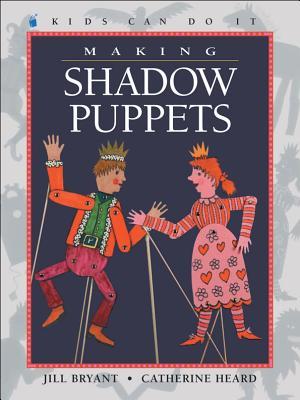
Making Shadow Puppets

Making Shadow Puppets

Making Shadow Puppets

In this Kids Can Do It title, kids discover the secret to creating traditional shadow puppets based on designs from around the world. With instructions for nine beautifully crafted and decorated wooden rod puppets, portable screen set-ups, scenery and script ideas, this book will help them put on plays that are sure to astound their family and friends -- without a shadow of a doubt! Puppet ideas include * a snake * a robot * a flying bird * a monster

ISBN: 1553370295
Author: Jill Bryant
Publisher: Kids Can Press
Rating: 3.56

Read Now

Download Book


Thursday, August 1, 2002

Origin

Origin

Origin

Stephen Baxter continues to think big and create SF on a grand cosmic scale in Origin, the third novel of his Manifold trilogy.

The Manifold is an infinite sheaf of alternative universes which Baxter explores in terms of Fermi's Paradox. There's no reason why humanity should be unique; logically there should be alien races, some long enough established to have made their mark on the galaxy; where are they?

Book one, Time, offered a vision of lonely humanity extending to the far end of eternity and finally rebooting a "better" universe. Space showed the consequences of teeming interstellar life, a cruel struggle for resources, punctuated by galactic-sized extinction events. Now Origin confronts the whole Manifold and its and humanity's manipulation by enigmatic "Old Ones".

Astronaut Reid Malenfant (versions of whom starred in Time and Space) again encounters advanced technology as a huge, glowing blue circle--a portal to and from the Red Moon that wanders between universes and has just replaced our own moon. It's habitable and populated by an extraordinary medley from all stages of human evolution, scooped up from different Earths. There's much conflict with primitives leading nasty, brutish and short lives... plus super-evolved humans who debate whether we are truly sentient.

At its core the Red Moon contains the failing World Engine which flips between universes. Also down there is the secret history of this multi-verse, right back to the cataclysmic branch-point from which the Manifold flowered. Who are the Old Ones? "They made the manifold"--but were maybe not so different from us and rash, quixotic Malenfant after all. Highly superior SF, guaranteed to jolt one's sense of wonder. --David Langford

ISBN: 0006511848
Author: Stephen Baxter
Publisher: Voyager
Rating: 3.64

Read Now

Download Book